Friday, March 30, 2007

Gold on Guns


One of the confusing things about gold on guns is that there is more than one way of putting it there - inlaid into the surface or laid on to the surface of the steel. So with that in mind inlaid gold (or other metals) should have a mechanical hold on the gun.

The way this is achieved with on lay - or damascening as it is better known - is to roughen the surface in the same manner that files were made in times past – with a series of parallel cuts at three different angles, which gives hundreds of very small teeth that grip the gold. The problem is that it works best with very thin gold and that has a tendency to wear out and get caught in things.

With true inlay a recess is made for the gold with a dovetail around the outside and when the gold is hammered in it is forced into the dovetail and is locked in place. This means that you can use much thicker gold and even have it above the surface of the gun so it can be carved back to any form you like or left flush and engraved. Some inlay work uses different metals inlaid together or gold in different colours but it should be remembered that a gun is meant to be used as well as looked at and gold will wear in time with heavy use.

The reason that we do not stick it there with glue or solder is that the guns are case hardened by heating up to red heat for a couple of hours in bone charcoal, then dropped into a bath of cold water so that the carbon migrates to the surface of the steel giving the steel (but not the gold) a glass hard finish and this would cause the gold to fall off.

Wednesday, September 27, 2006


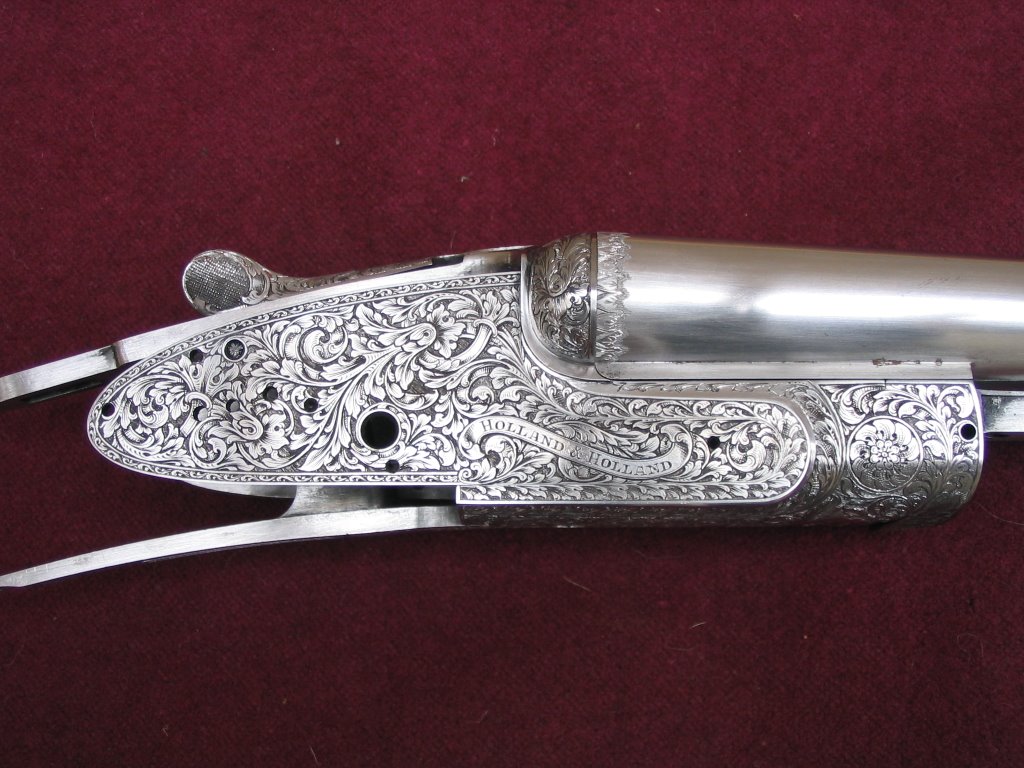
A new Holland & Holland gun I finished recently

Tuesday, September 26, 2006


“Can you add some more engraving to my gun?”

This is a question that most engravers are asked and it is a very difficult one to answer. Engraving of guns usually takes place near the end of its manufacture – the next process is to case harden and then polish before final assembly. So when I am asked to engrave on a gun that has been “finished” I try and explain why it’s not such a good idea. That said, some guns are not hardened all over as part of the manufacturing process (the trigger guard for instance), and some guns not at all. It is possible to anneal or soften a gun that has been hardened but the process is not for the feint hearted as the intense heat can warp the metal as the stresses are relieved; this would need the attention of a very skilled gunsmith to correct. Get good advice.

Most of the time when I am asked to enhance a gun that has already been engraved it’s because the customer has decided to have something personal added to it – maybe initials or armorials engraved on the small gold oval in the stock or gold inlay on the trigger guard. These should not be a problem. Guns without the gold oval can either have one fitted or the initials can be cut out of gold sheet and inlaid into the woodwork. All engravers can carry out this type of work which can make an interesting break between the bigger jobs that often take many weeks.

Friday, July 14, 2006


Thinking about the Pattern

The gunmakers here in the UK all have their own house styles of engraving and their guns can often be recognised from a distance by these patterns. This said, all the gunmakers are willing to put almost any style of engraving on their guns that the customer wants. Here the art of gentle persuasion comes in; you may think that the customer is always right and that is how he should feel, but some things are not such a good idea when engraved on or gold inlayed into guns. Please think what it will look like, not just for a few months after you get your gun back, but in a few years time when you have been looking at it a lot and your friends have all seen it.

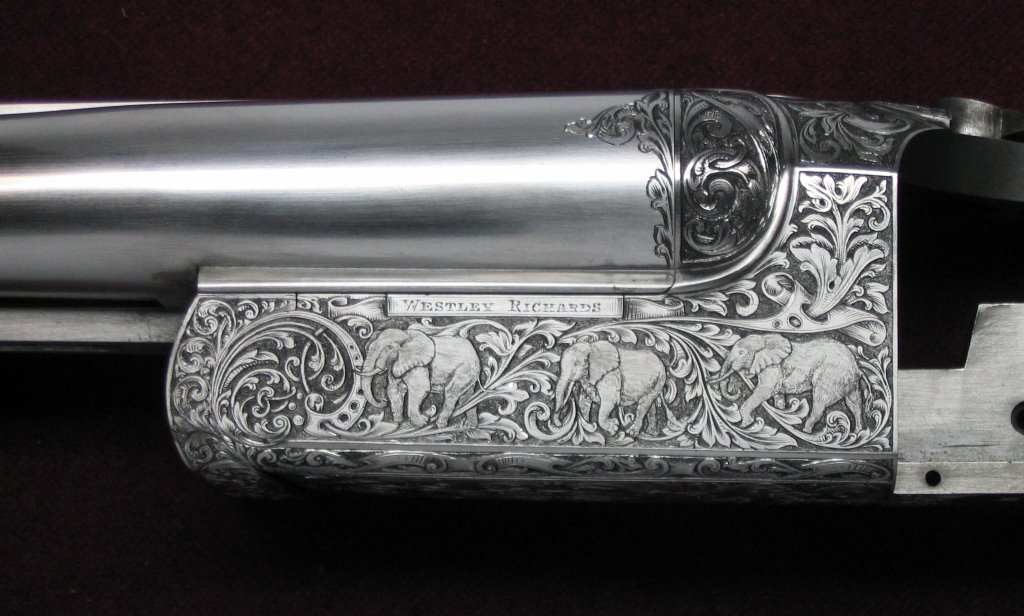
This is one of the reasons that the standard patterns came about. They give a good sense of identity with the gunmaker, have a wide appeal and as the guns get older they acquire a nice patina that enhances the look of the engraving and therefore the gun. Game scenes and gold inlay work all have their place in an embellisher's work, but they should be thought about very carefully and if possible discussed with the engraver.

Think about what you have seen and liked on other guns and more important not liked. Do you like the tight fine scroll work with or without roses, or do you prefer the open scrolls with a dark background that forms a contrast, acanthus leaf, strap-work or a bit of a mixture. You may have a favourite corner on your shoot and that could be used as the back ground to a pheasant scene. The choice is yours, but think carefully and be prepared to change your mind after you have spoken to the engraver.

Tuesday, July 04, 2006


What to Look for in Engraving

It can be a bit daunting to try and see all there is in the more complex patterns that are used by engravers to decorate guns. Most people just look out for scrolls that, instead of a nice even line, are rough or a corner instead of a curve. The thing to remember is that the engraver is only looking at a part of it at a time – so instead of trying to read the word, he is looking at parts of one of the letters.

This can help when trying to appreciate the engraving you are looking at. Try and look for an overall flow that runs through the engraving and then look at the details – the way the intertwining scrolls go behind on another and sometimes emerge on a different part of the gun. The more the pattern moves in and out of itself the more time the engraver has spent designing it and working on it generally, and that means it will probably cost more. But it also means that the pattern is more interesting and you will be able to look at it again and again, seeing something new each time. Look at the game scenes, are the birds as you remember them when you last saw them? Are the eyes too big or too small for the head? Have you seen trees look that? Has the engraver arranged things so that there is a screw head in the most important part of the scene? Look at the edges of the gold work, is it clean and tidy? Are there what could be loose bits? Now put it down (I know that will be hard) move away (harder yet) can you still see what the engraver was trying to get across, dose it work as an embellished gun?

That’s what we look for and so should you and if it's not right let the engraver know. We need your feed back or we will keep on making the same mistakes and you will stop giving us work.

Wednesday, June 28, 2006


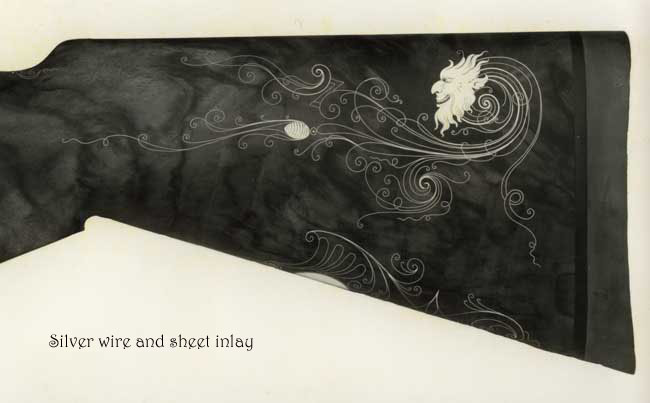
So, you want some engraving done; you have a gun or have one on order and the sales person has given you the chat about how wonderful it's all going to be. You take delivery of your pride and joy, and it's far from wonderful, the instructions about the type of engraving, the way the game scenes are arranged or the amount of gold that has or has not been inlayed is all wrong. What should you have done? Well talk personally to the engraver is always a good start, we don't bite: well not often. Any good engraver that cares about what they are doing will want to give the customer the finished job that will make them both proud. So talk and get to find out what sort of engraving your chosen engraver likes to do or more important what they do not like to do. You will be surprised at the sort of things that can be done, I have studied the engraving that has been done on antique guns and can now duplicate the techniques of the old masters, including the silver wire inlay that was put into the wood work. These, as well as traditional and more modern patterns will give my customers something they can enjoy for years to come.

Keith